


- Your cart is empty Browse Shop
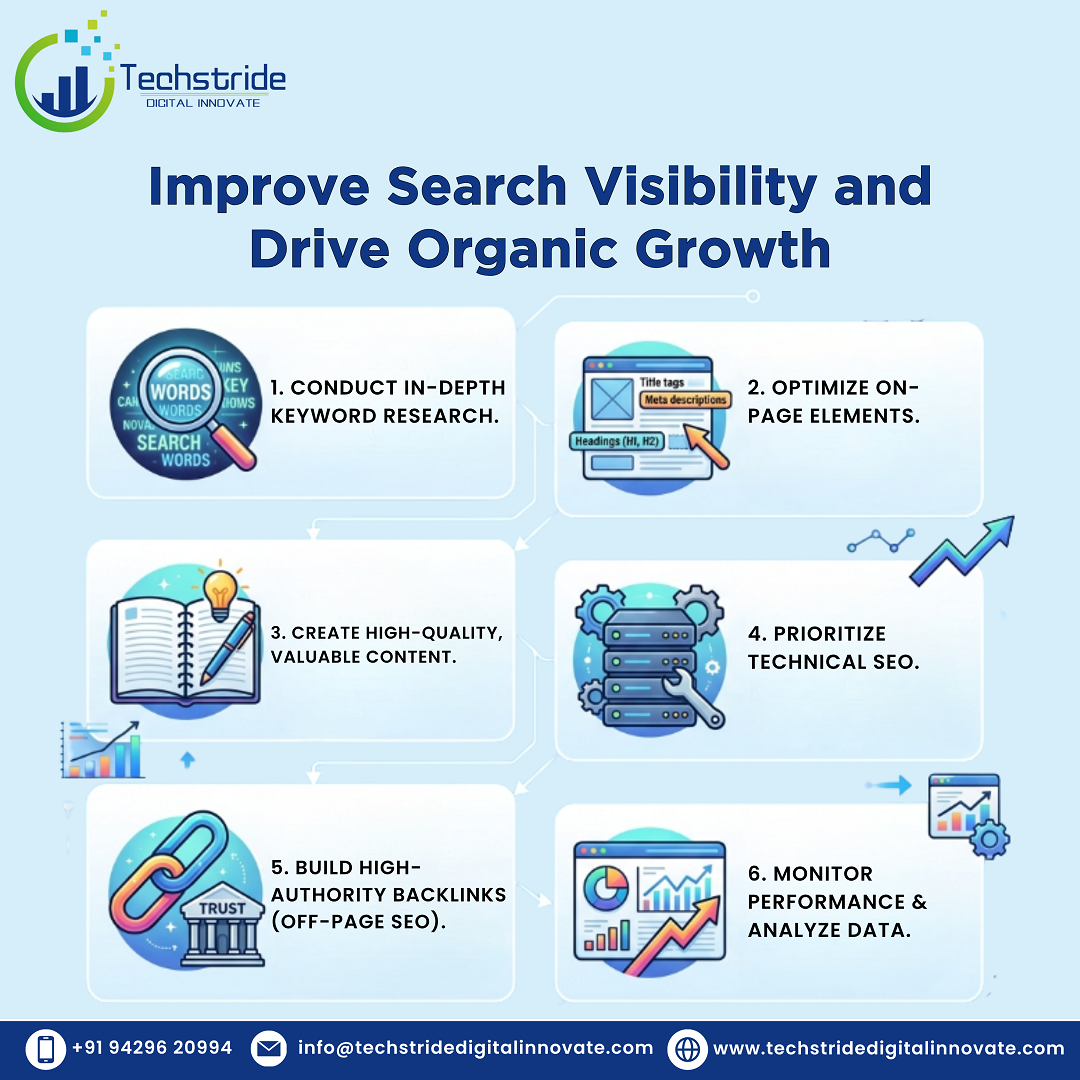
Smart Website Optimization Strategy for Search Engine Growth: Techstride Digital Innovate
Introduction
In today’s digital landscape, many businesses struggle not due to poor services but because of limited online visibility. From manufacturing units to service providers, success increasingly depends on how effectively a website is optimized for search engines. An effective Improve Google Ranking Through Optimization Strategy ensures better discoverability and consistent traffic. At Techstride Digital Innovate, the focus is on building structured SEO approaches that enhance visibility, align with user intent, and support long-term organic growth through practical and performance-driven optimization methods.
Search Engine Optimization (SEO) is not a one-time activity. It is a structured process that aligns website content, technical performance, and user intent so that search engines can understand and rank your pages effectively. However, improving Google ranking is not about shortcuts. It is about consistent optimization, clear content structure, and solving real user problems.
Practical Understanding of Search Engine Optimization
Search Engine Optimization is the process of improving a website’s visibility in search engine results pages (SERPs). The goal is simple: when users search for a product, service, or solution, your website should appear in relevant results.
But in practical business terms, SEO is not just about rankings—it is about:
- Making your website understandable for search engines
- Ensuring users find relevant answers quickly
- Improving technical performance and page experience
- Matching content with actual search intent
For example, in an industrial setup, if someone searches “industrial rubber liners supplier,” Google prioritizes pages that clearly explain product use, specifications, and trust signals—not just pages filled with keywords.
SEO works across three core layers:
- On-page optimization (content, headings, keywords)
- Technical SEO (speed, mobile usability, indexing)
- Off-page SEO (backlinks, authority signals)
Without alignment between these layers, ranking improvements remain inconsistent.
Applications of Search Engine Optimization
SEO is widely used across industries, but its real value is visible in operational and business outcomes.
- Industrial Manufacturing Visibility: Factories and manufacturers use SEO to showcase products like machinery parts, rubber components, and industrial tools. It helps buyers discover suppliers without relying only on trade exhibitions or referrals.
- B2B Lead Generation: SEO brings targeted traffic from decision-makers who are actively searching for solutions. This reduces dependency on cold outreach.
- Local Business Discovery: Local SEO ensures businesses appear in regional searches like “near me” or city-based queries.
- Product-Based Ranking: E-commerce and industrial catalogs use SEO to rank product pages for specific technical keywords.
- Service Industry Growth: Companies in IT, marketing, and consulting use SEO to attract inbound leads through educational and solution-based content.
In all these applications, SEO acts as a bridge between demand (search behavior) and supply (business offerings).
Core Challenges in SEO Implementation (Real-World Perspective)
Most businesses face similar challenges while trying to improve rankings:
- Poor Content Organization: Numerous sites release material lacking a clear hierarchy or keyword goal matching.
- Sluggish Site Speed: Big graphics, substandard hosting, and inefficient code diminish ranking capability.
- Absence of Keyword Planning: Aiming for off-topic or saturated keywords results in low discoverability.
- Unaddressed Technical SEO: Problems like dead links, repeated pages, and indexing mistakes frequently pass by unnoticed.
- Inconsistent Content Publishing: Sporadic updates erode site authority over the long term.
These are not theoretical problems—they are common operational issues seen across industries.
Practical Optimization Strategy to Improve Google Ranking
Improving ranking requires structured execution:
Keyword Mapping Based on Intent
Instead of random keyword placement, map keywords to user intent:
- Informational (what is, how to)
- Transactional (buy, supplier, manufacturer)
- Navigational (brand searches)
Content Structuring
Use proper hierarchy:
- H1 for main topic
- H2 for sections
- H3 for subtopics
This helps search engines understand content relevance.
Technical SEO Improvements
Focus on:
- Page speed optimization
- Mobile responsiveness
- Image compression
- Clean URL structure
Internal Linking Strategy
Connect related pages logically:
- Blog → Service page
- Service page → Contact page
- Product page → Category page
External Linking Strategy
Use credible references such as:
- Industry knowledge sources
- Government portals
- Educational platforms
Content Depth and Relevance: Google prioritizes content that fully answers user queries. Avoid shallow explanations.
For in-depth articles and expert perspectives on SEO and digital strategies, platforms like Medium offer valuable insights from industry professionals and practitioners.
About Techstride Digital Innovate
At Techstride Digital Innovate, we understand that SEO is not just about ranking—it is about building a stable digital system that supports long-term visibility.
Our approach focuses on practical execution:
- Structured keyword planning based on industry research
- Technical SEO audits to identify hidden issues
- Content strategies aligned with real user search behavior
- Performance monitoring and continuous optimization
We work with businesses that want measurable improvements in visibility, not just surface-level traffic spikes.
Website: https://techstridedigitalinnovate.com/
Conclusion
Improving Google ranking is not achieved through isolated efforts. It requires a consistent optimization strategy that combines content quality, technical performance, and user-focused structure.
Businesses that treat SEO as a long-term operational process rather than a Digital Marketing shortcut tend to build stronger visibility and more stable traffic over time.
The real objective is not just ranking higher—it is becoming more discoverable, more relevant, and more useful to your target audience.
For technical SEO challenges and real-world problem-solving discussions, platforms like Stack Overflow provide valuable developer-driven insights and practical solutions.
Key Takeaways
- SEO improves visibility by aligning content with search intent
- Technical performance plays a major role in ranking stability
- Keyword strategy must be structured, not random
- Internal and external linking strengthen authority
- Consistent content publishing builds long-term SEO value
- Practical optimization is more effective than theoretical SEO
Trending FAQs
1. How long does SEO take to show results?
- SEO typically takes 3–6 months, depending on competition and website condition.
2. Why is my website not ranking on Google?
- Common reasons include weak content, poor technical setup, and lack of keyword targeting.
3. Is content more important than backlinks?
- Both are important. Content builds relevance, backlinks build authority.
4. How often should I update SEO content?
- Updating content every 3–6 months helps maintain ranking stability.
5. Can small businesses compete with large companies in SEO?
- Yes, with targeted keywords and local SEO strategies.
#SEO #SearchEngineOptimization #GoogleRanking #DigitalMarketing #ContentStrategy #OrganicGrowth #OnPageSEO #TechnicalSEO #TechstrideDigitalInnovate #WebsiteOptimization #SEOStrategy #TechstrideDigitalInnovate